I started my career in the Navy as a nuclear-trained Electronics Technician. I was part of the initial commissioning crew of the USS North Carolina (SSN-777), a Virginia-class submarine, and qualified as Engineering Watch Supervisor, responsible for supervising nuclear propulsion plant operations in a high-consequence environment. My final assignment was instructor duty at Nuclear Field “A” School, teaching electronics to future Navy nuclear operators. That assignment changed the direction of everything: deep technical expertise became a responsibility for developing others. That standard followed me when I left service.
For the past decade I’ve led system operations training and procedures at Eversource Energy, a regulated electric and gas utility serving Connecticut, Massachusetts, and New Hampshire. My team qualifies the Distribution and Transmission System Operators who control the electrical grid. We run qualification programs across 10 control rooms, manage 950 to 1,100 procedure revisions a year, and support switching and tagging compliance programs that reach roughly 3,000 field personnel across 3 states. The organization has 40 people. Two managers oversee training and procedures. The work touches nearly every part of electrical operations, with interfaces into other parts of the organization through human performance and governance work.
The scope extends well past training delivery. I founded the Error Reduction Committee (ERC), an executive-level governance body for causal and barrier analysis across Electrical Operations. I revitalized the Switching and Tagging Executive Steering Committee across all 3 states, rebuilding a governance structure that had grown stale. During major storm events, I run a branch from start to finish: stand it up, order contractors, staff it, set schedules, and manage operational issues through restoration. My team manages roughly 1,000 procedure revisions per year.
I’m also a credentialed executive coach (BCC, ACC, CEC) with an MBA, MSA, and CPTD. The coaching work runs alongside the utility role. The skills are the same: diagnosing system conditions, developing judgment in others, making complex work governable.
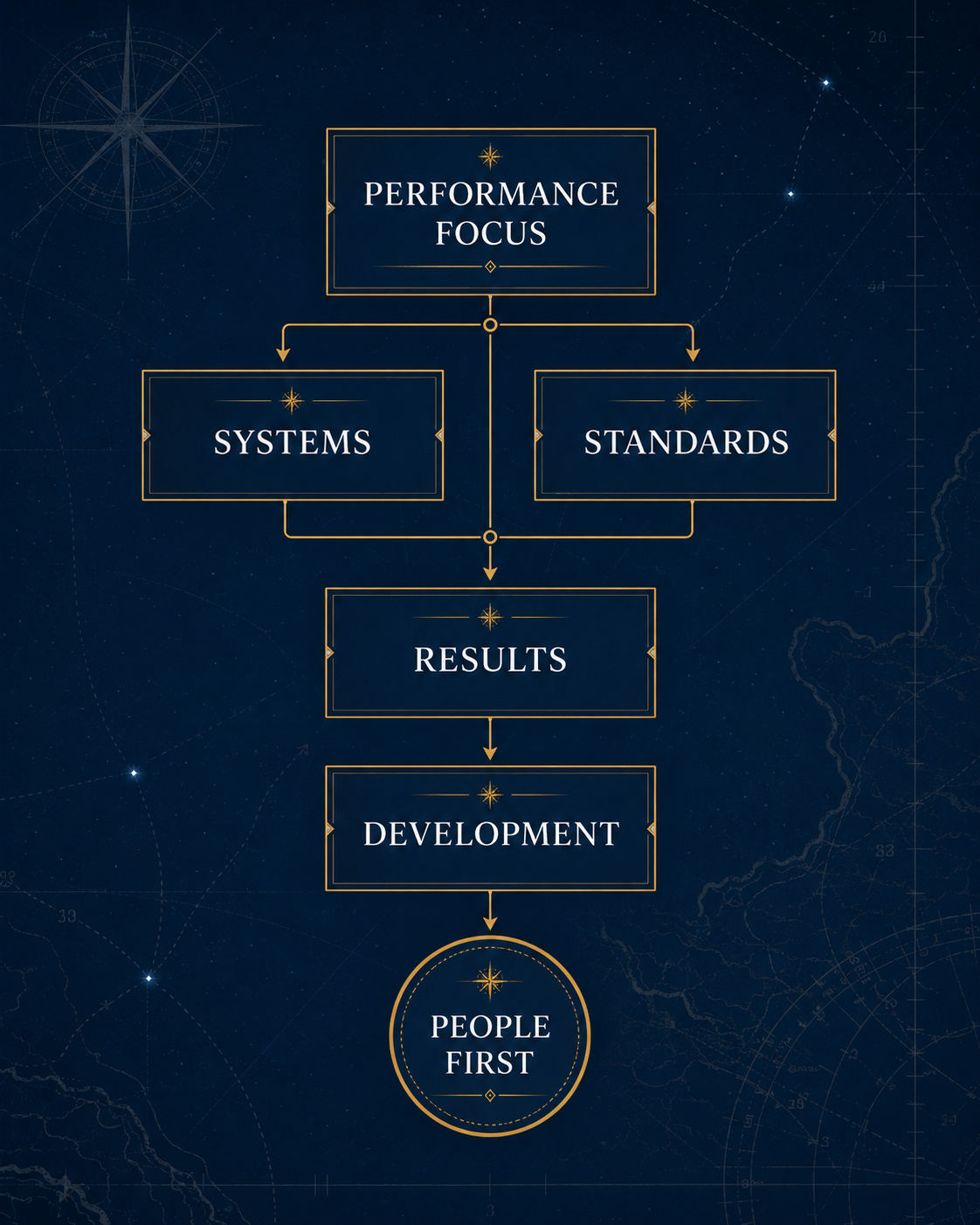
I build operating systems, not activities. Take high-risk, cross-functional work and turn it into stable structures that leaders can govern and teams can execute, especially under pressure.
Credentials
- Board Certified Coach (BCC)
- Associate Certified Coach (ACC, ICF)
- Certified Executive Coach (CEC)
- Five Frequencies Certified Leader
- CPTD (expires Apr 2029)
- Certified Technical Trainer (CTT)
- Certified System Operator (NW Lineman)
- NACD Directorship (in progress)
Education
- MBA (Project Management)
- MS Accounting
- MS Management & Leadership
- BS Nuclear Engineering Technology
Industry
- Regulated electric & gas utility
- NERC / FERC qualified training
- ISO-NE, NPCC, OSHA compliance
- EEI Conference presenter (2023)
By the numbers
- 40-person team
- 3 states, 10 control rooms
- ~1,000 procedure revisions/year
- ~6,000 instructor hours/year